Floras
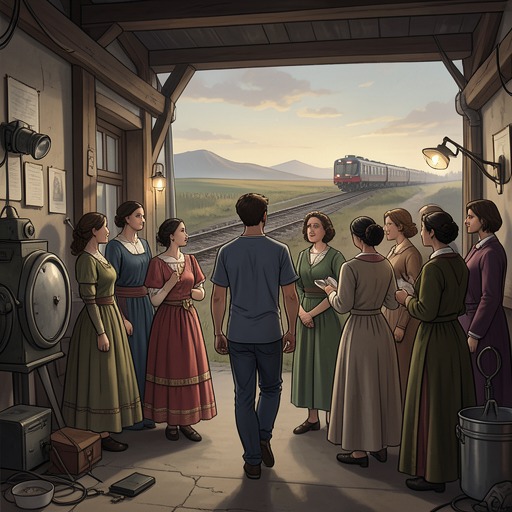
Finnegans WakeThe Floras are a month-long company of maidens who pick on Izod and form her guard, but their role extends beyond that of a schoolgirl retinue: they become a shifting procession of named girls and flowers, then the collective audience for Glugg’s public humiliation and contest with Chuff. Their passage links youthful display, floral abundance, and the spectacle of male rivalry.
Identity and Introduction
The Floras are introduced as Girl Scouts from St. Bride's Finishing Establishment, a month’s bunch of pretty maidens who demand acidulateds. They pick on Izod, their pet peeve, even as they form a guard around her with what the narration calls “valkyrienne licence.” Their position is therefore double: they protect Izod as a group while also making her the object of their collective teasing.
Izod is presented as the bewitching blonde at the center of this arrangement, whose loveliness is approached only by her reflection in a mirror. The Floras’ relation to her is less that of a quiet escort than a lively, watchful formation; their guarding and picking at her occur together, without the passage resolving that contradiction.
The Girls as a Procession
The scene gives the group a vivid material presence through their clothes and movement: catchmire stockings, libertyed garters, shoddy shoes, pennyfair caps pinned to frocks, and a ring on a finger. They leap and link as they move, their circling dance making the group appear at once coordinated and unruly. The language repeatedly turns their motion into loops and returns, so their entrance feels less like a fixed roll call than a procession that can keep coming around again.
The narration names colors through an alphabetic sequence—Rubretta, Arancia, Yilla, greeneriN, Boyblue, and odalisque O—then insists that the girls remain schoolgirls even as the scene’s language enlarges them into something more ceremonial. Refrains of doing the same thing again make their dance recur rather than advance toward a distinct destination. The Floras thus occupy two scales at once: a particular band of girls and a patterned, almost floral movement through the scene.
Names, Flowers, and Return
A later roll call individualizes the collective through Winnie, Olive, Beatrice, Nelly, Ida, Amy, and Rue. The girls are also recast as “florals,” ranging from fancy and pansy to poppy’s blush and forget-me-not. The sequence joins personal names to cultivated and wild flower imagery, so the Floras seem to bloom outward into a whole garden rather than remain only a school party.
That expansion is framed by a compact image of renewal: “while there's leaf there's hope,” followed by springtime’s ruse and May’s blossom. The girls’ return as a gay pack makes recurrence part of their characterization. They leave and come back in the language of the passage, carrying the promise of renewed growth with them.
Spectators to Glugg’s Disgrace
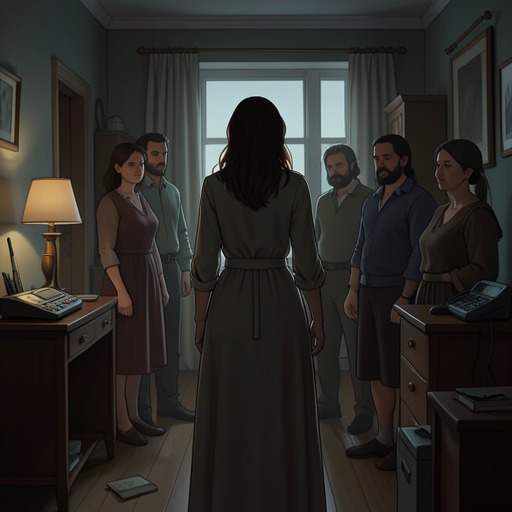
The scene turns from the palms of perfection toward an “anger arbour,” and the mood shifts from floral display to conflict. Glugg feels floored and exposed amid girls whose colors he cannot identify; he longs for a smile that might allow him to fondle praise, but no gesture reveals the unfamiliar. The surrounding female company becomes a hostile audience in his eyes, leaving him at odds with the “beasties” rather than welcomed by them.
Glugg then plunges into a succession of physical contests, striking, wrestling, and battling a series of opponents before the passage sends him home. The Floras are not individually assigned those blows, but their presence supplies the collective spectacle around his visible disgrace. Their role moves from guarding Izod and dancing in formation to forming part of the social world before which male rivalry is performed.